
Dreamlike Absurd

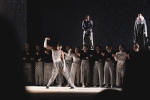
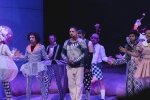
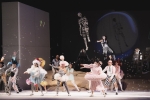
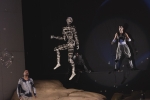
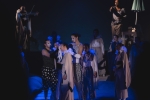
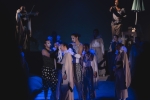
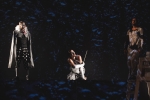
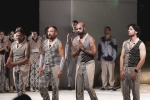
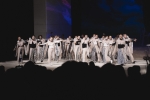
Yesterday I was in the desert riding a bicycle. I saw a giraffe holding a newspaper, a shark feeding a bear with honey, a whale selling ice cream, then I traveled by train, met dancing sweets, and saw the invisible child, all while hearing bells and humming, “ram-ta-ra-ri-ra-ra-reira...”
I knew you wouldn’t believe me, but it really happened at the State Opera Stara Zagora during the premiere of Veselka Kuncheva’s “The Invisible Child”, part of the side program of the International Puppet Theatre Festival “Pierrot”. The performance is musical and inspired by the work of P.I.F.’s frontman, Dimo Stoyanov, who passed away in 2020.
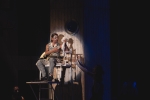
The songs were performed live by composer Milen Apostolov and the band members – Ivan Velkov, Martin Profirov, and Hristo Mihalkov – who became the quiet, tender, and “invisible” presence of the wondrous world on stage. What unfolded behind them, however, could be described quite differently. Imagine the strangest, most colorful dream without logic or sequence, filled with exaggerated characters and shifting emotions, all carried by your favorite songs. You wake up confused, not knowing exactly what happened, yet moved by “longing and fear” and asking yourself “why does it hurt?”
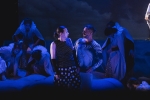
The staging key of the performance lies in the principle of clownery. Surreal interpretations reflect both the spirit of the songs and the magical invisible presence of the vocalist. It feels as if everything stands on a small platform above reality, observing and refracting it through the prism of dreams. The actors’ performance emphasizes expression, as they paint the lyrics with bodies and gestures to bring the songs to life on stage. Yet this remains one of the weaker elements – the gestures stay superficial until the very end, without building or deepening the meaning of the words and music. This creates a monotony that doesn’t always enrich the otherwise vivid imagery of colors and musical motifs.
The band’s work reflects both the dark corners of the soul and the beauty of the world through childlike innocence. These elements were present, though some characters felt unfinished, naïve, and underdeveloped. The strongest focus on this aspect came through the figure of the Clown, portrayed by Kaloyan Georgiev, whose delicate interactions with the characters created a sense of warmth and ease.
Since the performance wrestles with the feeling of futility, stemming from one of the band’s most beloved songs “Bicycle”, I wondered how to end this text while searching for meaning in the absurd. But perhaps there’s no need to look for meaning in the unimaginable? Isn’t that exactly where its meaning lies? You simply need to believe it and escape into its world whenever reality makes you feel like an invisible child.
Teodora Voyvodova
